|

PARK AVE CDs
2916 Corrine Dr, Orlando, FL 32803 | MAP
407.447.PARK (7275)
info@parkavecds.com
Store Hours
Mon - Thu: 10am - 10pmOUR NEWSLETTER!
SIGN UP NOW

|
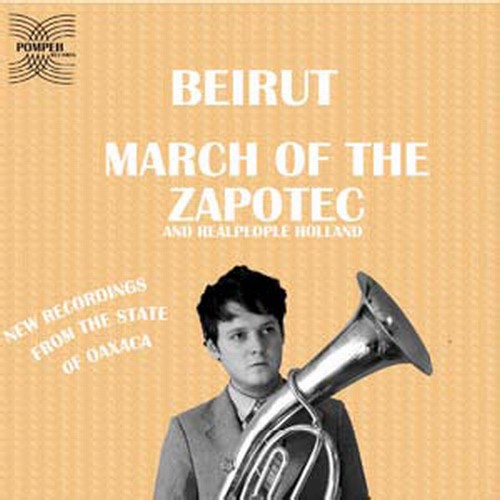
For the past year, Beirut has alternated between touring in support of
2007's much-lauded The Flying Club Cup and writing a wealth of new
material. With no sense of a release in mind, bandleader Zach Condon
recorded in any style that struck his fancy. Some early discussions
about recording material for a film being shot in Mexico morphed into a
new idea: What about finding a local band in a small city in Mexico,
hiring them to play some new material, and recording the result?
It
was a sincere challenge every step of the way. Condon had to find the
band, which he did through a bandmate's mother who has connections in
Oaxaca. To communicate with the performers, he hired a translator, who
had to be able to speak English, Spanish, as well as Zapotec, the band
members' native language. From there, he flew down to Oaxaca, traveling
a half-hour out of town to the tiny weaver village of Teotitlan del
Valle, where he met the nineteen members of The Jimenez Band. The
ensuing weeks of recording, rewriting, and relating are documented in a
series of short films (to be released online as the release date for
March of the Zapotec draws near).
All well and good, but the six
songs found on March of the Zapotec are only a part of what this
release has become. Before recording as Beirut, Condon went by
Realpeople for his bedroom recordings, and he has revived the name for
the second half in this collection, Holland. As opposed to March of the
Zapotec, Holland collects a series of songs conceived and completed at
home. One song, Venice, appeared on a compilation by The Believer
magazine, while My Night with the Prostitute from Marseille was on the
Big Change digital-only charity compilation on iTunes.
Together,
this album-length double release represents the totality of Condon's
work over the past year. March of the Zapotec is further testament
toward the inventiveness and intimacy he creates as Beirut, a band
which started as one person sounding like twelve, and has developed
into a particular style and sound. No matter what inspirations
jumpstart any one particular song, underlying it all is the realization
that Condon is a singular artist creating an original sound. What may
appear at first to be two disparate paths are in reality joined by
Condon's ability to craft simple melodies that sound both unique and
unforgettable. It would be a misconception for Beirut's sound to be
considered a dabble in various styles, folk sounds, and music
histories, because one could never confuse Condon's music for the
original inspiration; all his songs on this release carry more in
common with each other than they do their original source of
inspiration. And whether he's being inspired by Balkan folk, French
chanteuse, Mexican troubadour, '80s synth pop, or '90s house, the
common thread remains Condon's ability to personalize the sound.
March
of the Zapotec marks the continuing emergence of a musician who has
only shown an inkling of where he is headed. And while the road may be
long, every stop along the way invites a new experience. Enjoy the
latest.